$100 Hallway Makeover on a Budget: 11 Renter-Friendly Ideas for Long, Narrow Corridors
A hallway is the room nobody photographs and everybody walks through a dozen times a day. In a small apartment it is usually long, narrow, dark in the middle, and treated as a place things pass through rather than a place at all — shoes migrate there, the laundry basket lives there, and the walls stay blank because “who decorates a corridor?” The answer is: the person who walks it every day. A hallway makeover on a budget does not need width. It needs a floor line, light in the middle, and rhythm on the walls, so the corridor stops feeling like a tunnel and starts feeling like a room you chose. These eleven narrow hallway ideas do exactly that, with nothing drilled or left behind at move-out — and the receipt at the end proves the whole look lands under $100.
The Floor: Draw One Line
1. A washable runner draws the room
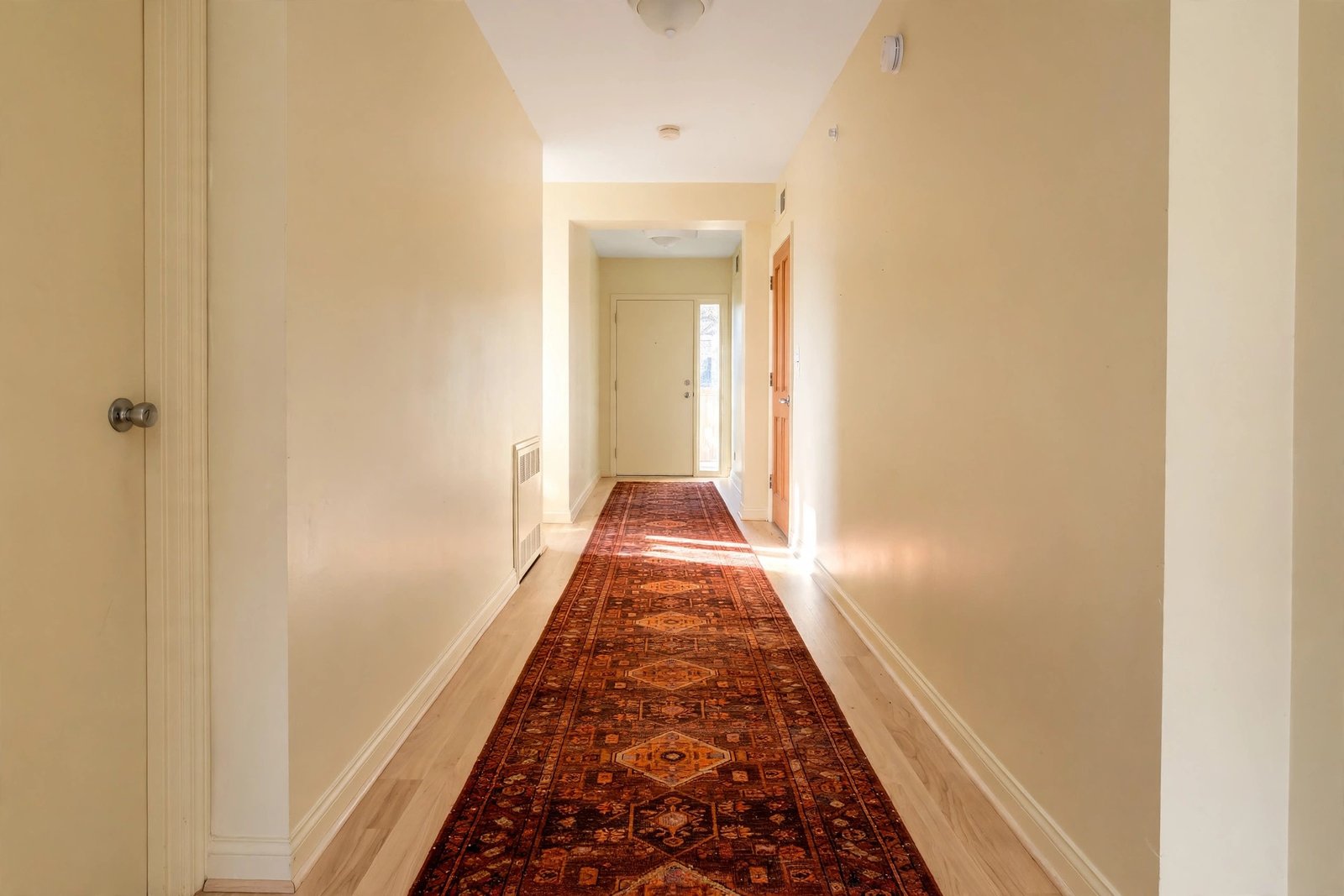
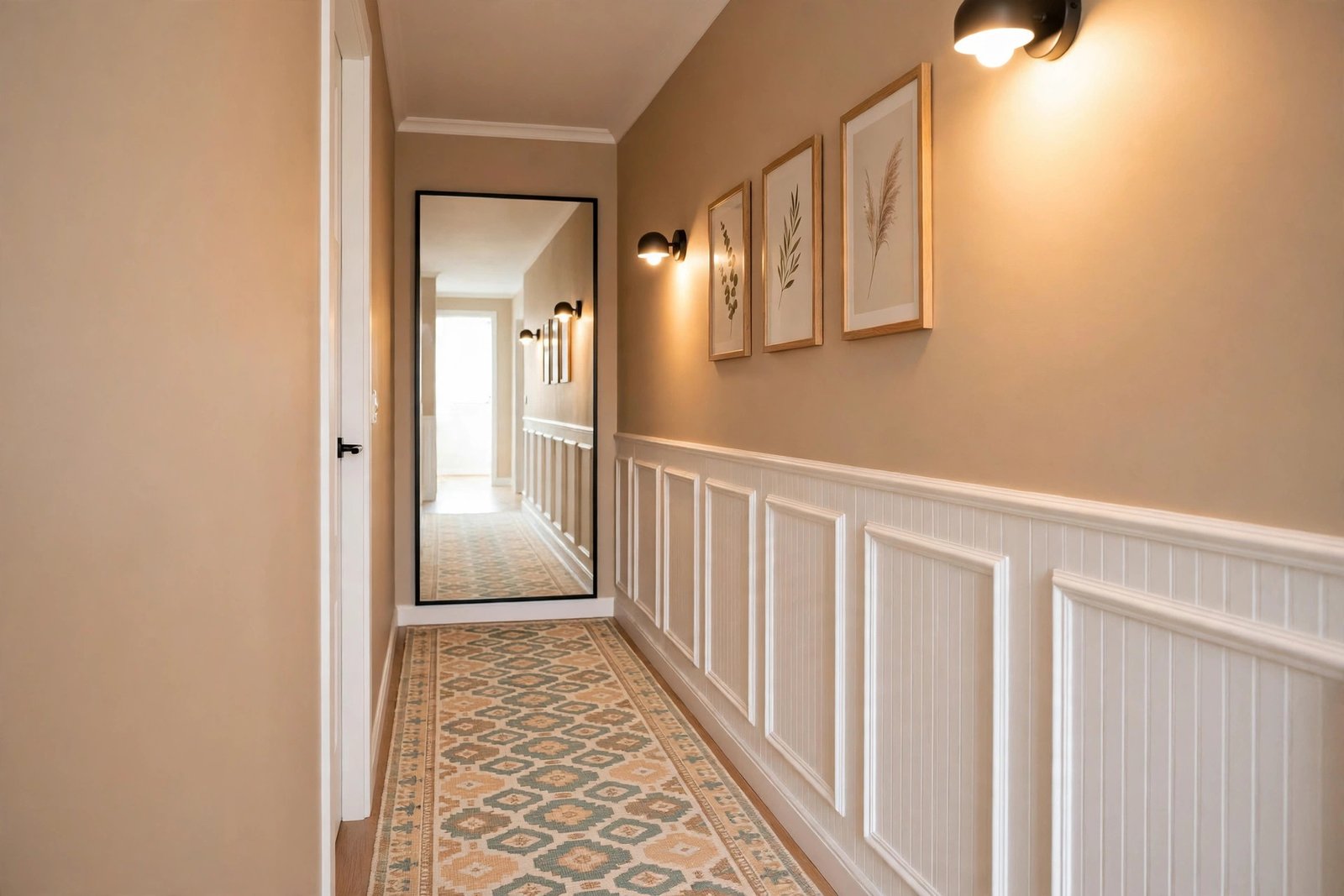
A bare hallway floor is a corridor; a runner down its middle is a room with a direction. One long washable runner in a dark pattern hides the scuffs a hallway collects and gives the eye a line to follow from door to living room. Pick one that leaves a hand’s width of floor showing on each side — wall-to-wall reads as carpet, a runner reads as a choice. It is the same rug-as-a-wall trick from our entryway and dining nook makeovers, stretched to its longest form: the cheapest architecture you will ever buy, and it rolls up and leaves with you.
2. A door mat that matches, not clashes

The mat by the front door is the first thing in the hallway and usually the ugliest — a freebie in a colour nothing else in the apartment owns. Swap it for a plain coir or washable mat in the runner’s colour family and the hallway starts matching from step one. It costs almost nothing and it is the one item guests actually step on, so it does more work per dollar than anything else in this list.
3. One low basket for the hallway’s clutter
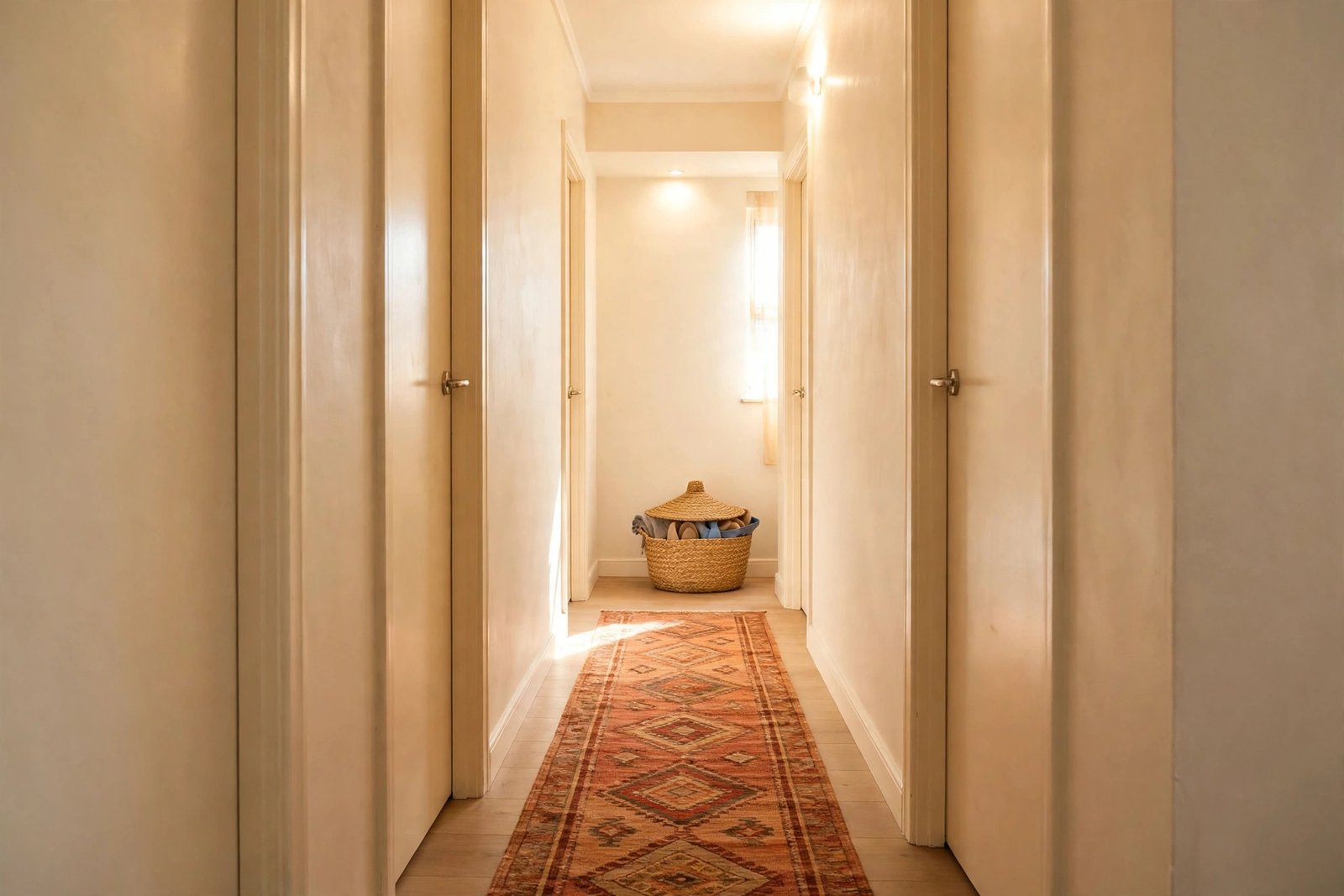
Hallways collect what has no home: the bag, the umbrella, the parcel, the shoes that did not make it to the rack. Give the corridor one lidded basket at the far end and make it the law — everything homeless goes in the basket, nothing lives on the floor. A lidded basket reads as furniture; an open pile reads as a corridor that lost a fight. The storage thinking behind it lives in our small apartment storage guide; this is the one-basket version for the narrowest room in the flat.
The Walls: Light and Rhythm
4. A peel-and-stick wainscot strip gives the walls architecture

Hallway walls are usually the blankest in the apartment, and the longest. One strip of peel-and-stick wainscot-effect panel run along one wall at waist height turns a flat corridor into a room with architecture — the same backdrop trick from our dining nook, laid along a hallway instead of behind a bench. Keep it to one wall, so it reads as a panel made for the corridor, not a half-finished room. It presses on and peels off clean at move-out.
5. Battery wall lights fix the dark middle
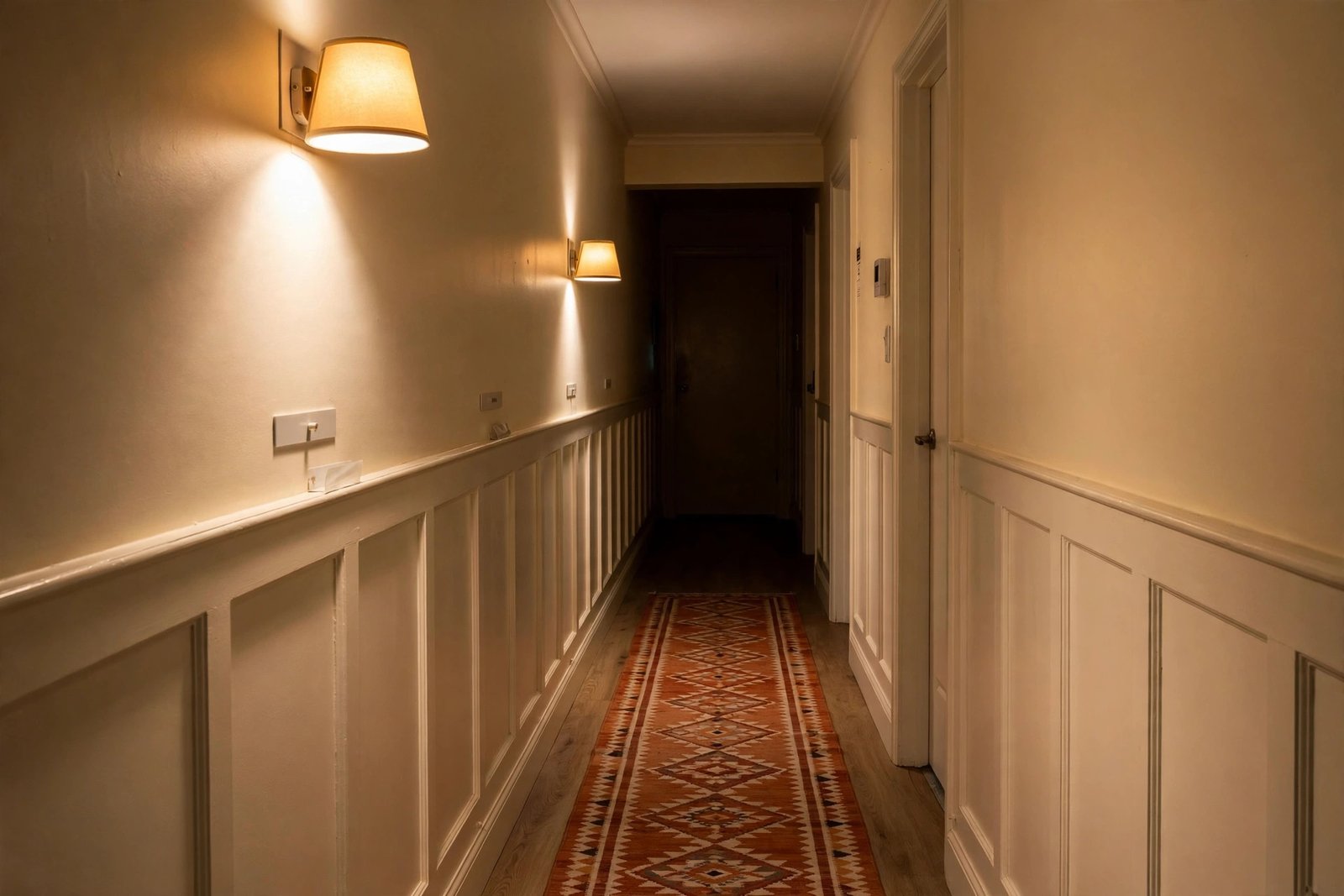
Hallway light is always wrong: bright at both ends, dark in the middle, because the ceiling light is never where you walk. Two battery wall lights on removable adhesive strips, spaced along the wainscot wall, give the middle of the corridor the light restaurants never skip — warm pools on the wall instead of one harsh overhead. Warm white only; this is evening light, not office light. No wiring, nothing a landlord can object to.
6. One big mirror doubles the light
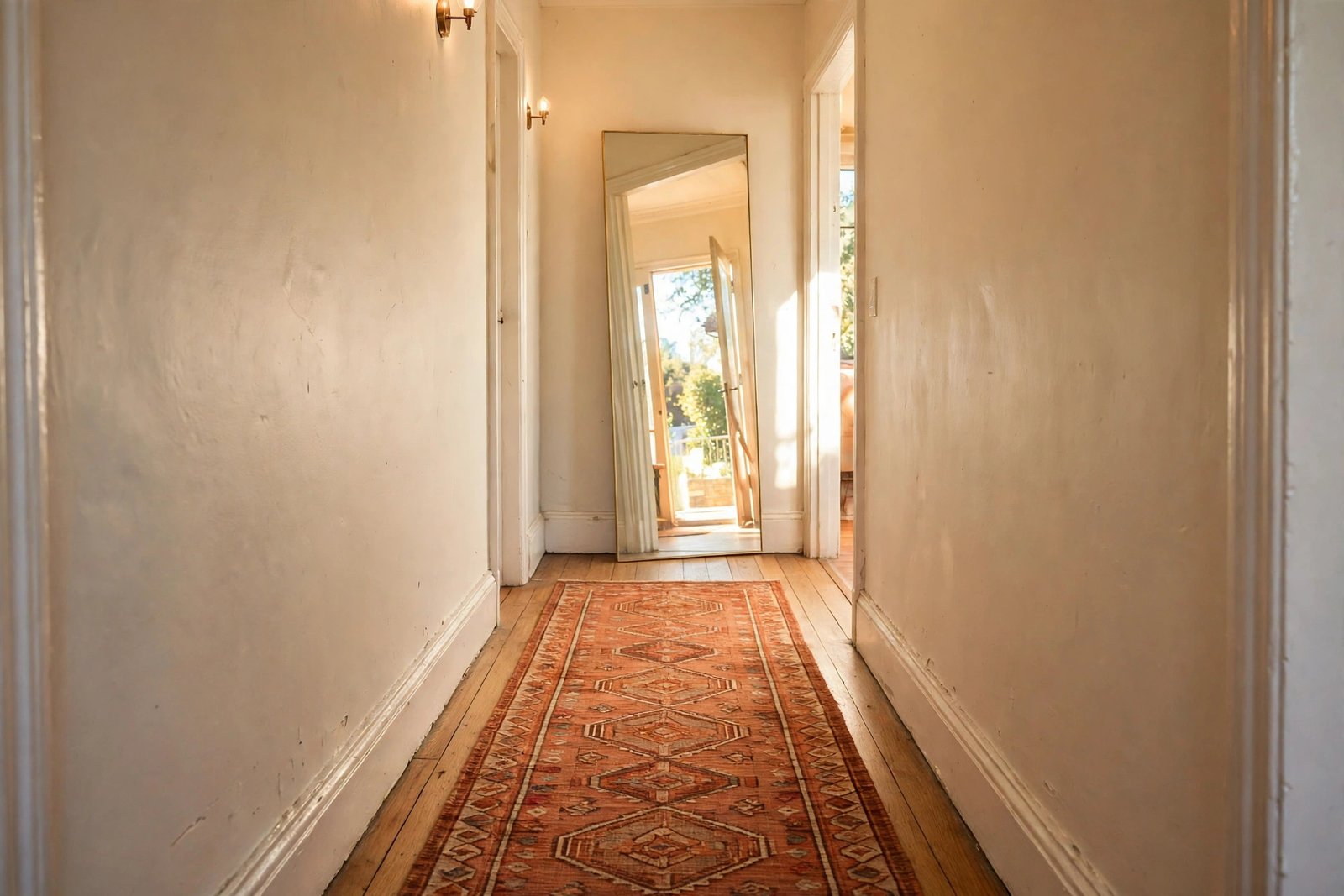
A hallway has no window, so borrow light from the rooms at either end. One large leaning mirror at the far end — or a mirror hung on adhesive strips if leaning is not an option — bounces the living room’s light down the corridor and makes the narrow space feel twice as wide. One mirror, not a gallery of small ones: a corridor needs one confident reflection, not nine little ones competing. It is the same mirror logic as our bathroom makeover, used here to steal light instead of to check a face.
7. Three frames in a row, not a gallery wall
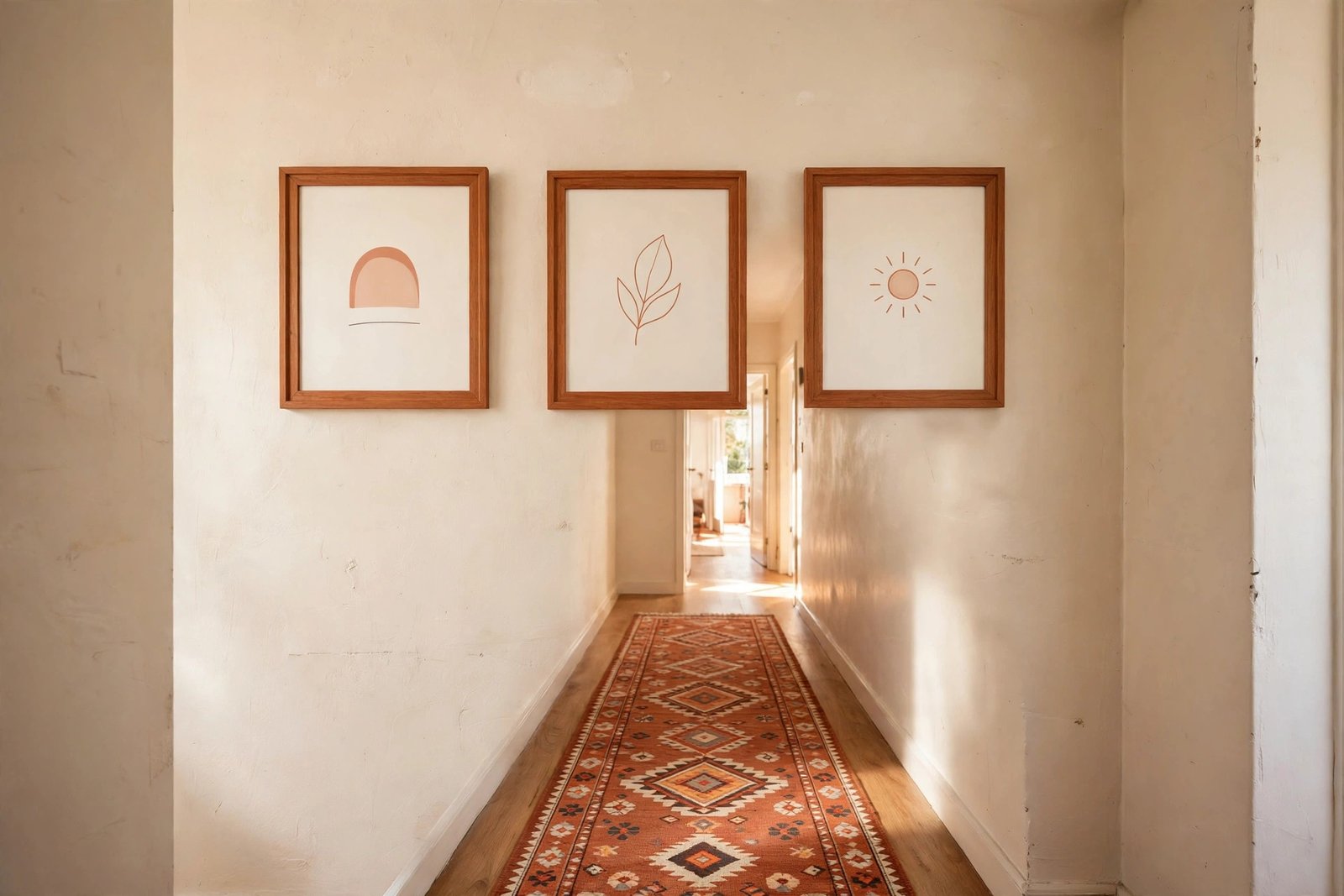
A gallery wall in a hallway is clutter at arm’s length — you walk past it sideways and every frame competes. Hang three matching frames in a straight row at eye level, same size, same colour, same spacing, with one simple print in each. Three in a row reads as rhythm; twelve at random reads as a corridor that could not decide. Keep the prints light and bright — the hallway needs brightness more than it needs art.
The Finish
8. Matching hooks, one per person

The coat hooks in a hallway are usually three different shapes from three different flats. A row of matching adhesive hooks — one per person, no more — makes the wall look designed instead of accumulated. Hang only what is worn this week; the out-of-season coats live in the closet, where our $100 closet makeover gave them a home. Hooks that hold one coat each stay tidy; hooks that hold three coats each become a pile with a hook in it.
9. A narrow ledge for one plant and one print
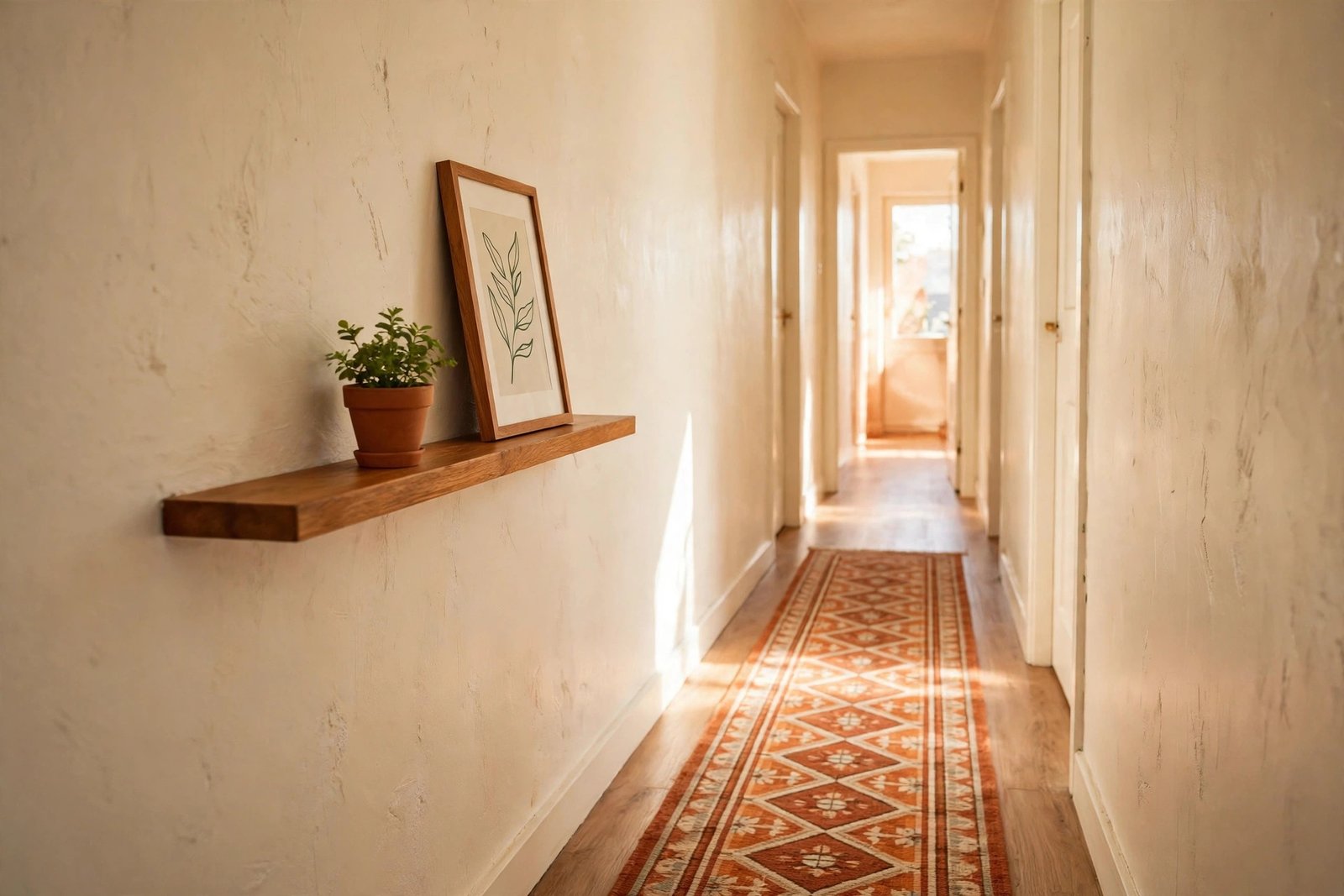
A hallway has no surface, so give it one: a narrow picture ledge on removable adhesive strips, at the end opposite the mirror, holding one small plant and one framed print leaning against the wall. It is the same ledge from our dining nook, used here as the corridor’s only shelf — one plant, one print, and nothing else is allowed to live on it. A ledge with nine things on it is a shelf of clutter with better PR.
10. One plant, placed where the light lands
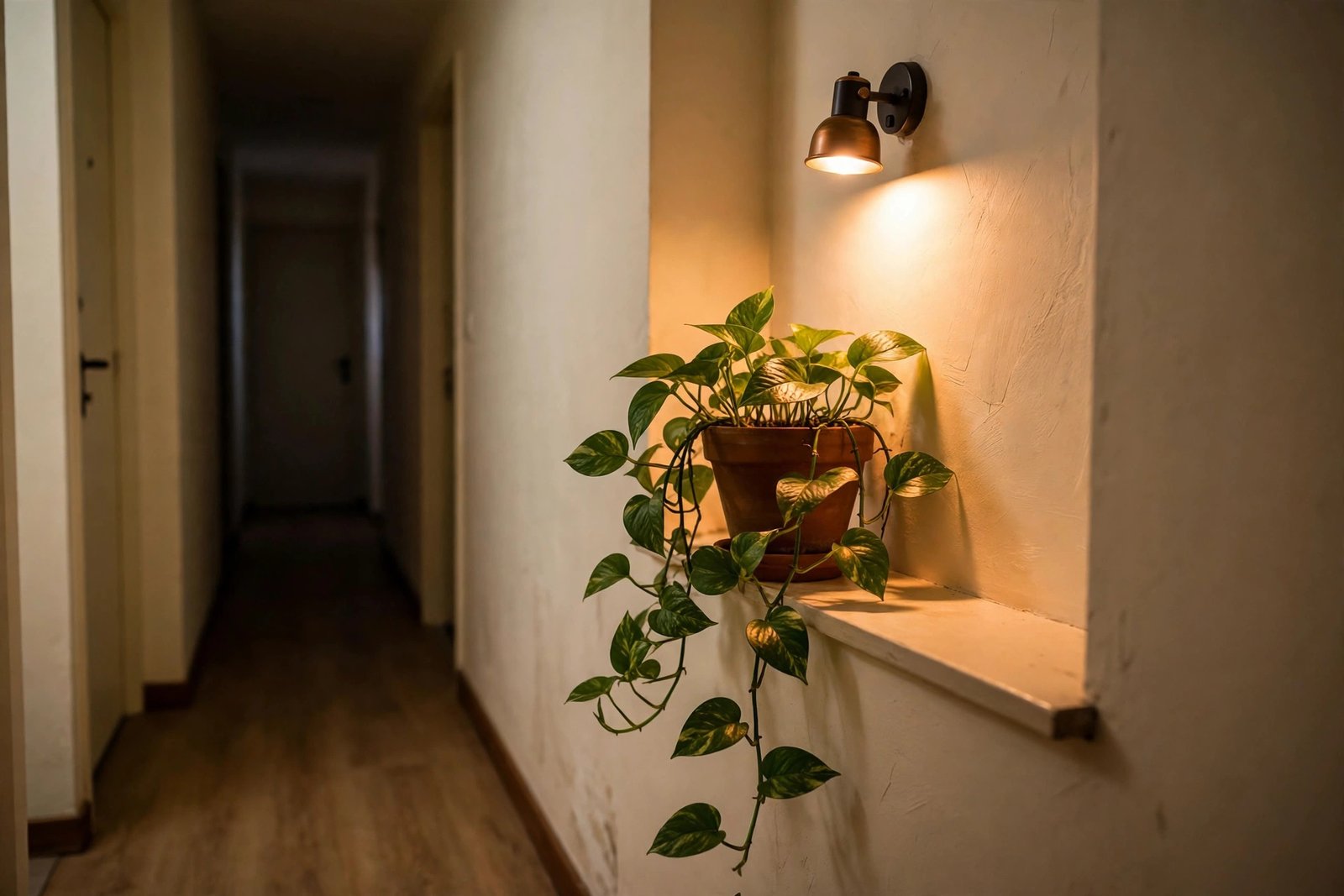
The finish is one living thing. A trailing pothos on the ledge, where the battery lights pool, so it glows a little in the evening. One plant, not three: a hallway is a metre wide, and a jungle shrinks it. Real or good fake matters less than placement — and a fake one never drops leaves on the runner.
11. The free finish costs nothing

The last idea is free: walk the hallway and remove one thing. The parcel, the extra shoes, the bag that lives on the floor — one thing out, and the corridor you just decorated can finally be seen. A hallway that looks finished is usually one with less in it, not more, and a photo taken from the front door is your Pin 1. This finish is what makes the corridor hold its own as a room, walk after walk.
What $100 Actually Buys Here
This is a makeover, not just a tidy-up — and the receipt is the point. Done in the order above, the whole look lands at about $97 total, comfortably under $100, with nothing nailed, drilled or left behind at move-out. Approximate budget prices, marked ~ because they vary by store — check before you buy:
- Washable runner (long) ~$20
- Peel-and-stick wainscot strip ~$16
- 2 battery wall lights ~$14
- Large leaning mirror ~$13
- 3 matching frames + prints ~$11
- Matching adhesive hooks (set) ~$9
- Lidded basket ~$8
- Door mat (matching) ~$6
Total: ~$97. If you already own a mirror that fits, the total drops to ~$84; skip the wainscot in a hallway you barely see and it drops further. Either way the deposit stays safe, nothing is drilled, and every single item peels off, lifts out or rolls up at move-out.
The Order to Do It In
Morning: runner down, mat swapped, basket placed — the three things that draw the floor line. Midday: wainscot strip, then the mirror at the far end, once the runner position is final. Afternoon: battery lights, frames in a row, hooks and ledge, all at eye level. Evening: plant placed, then the free finish and the photo from the front door. One day, about $97, and a corridor that finally reads as a room.
A hallway does not need width to feel chosen. It needs one line on the floor, light in the middle, and rhythm on the walls. The door end of it lives in our entryway makeover, and the same removable thinking remade a dining nook for $97 and a tiny rental bathroom for $97 — this corridor proves it works in the narrowest room of all: the one you walk through without ever seeing.