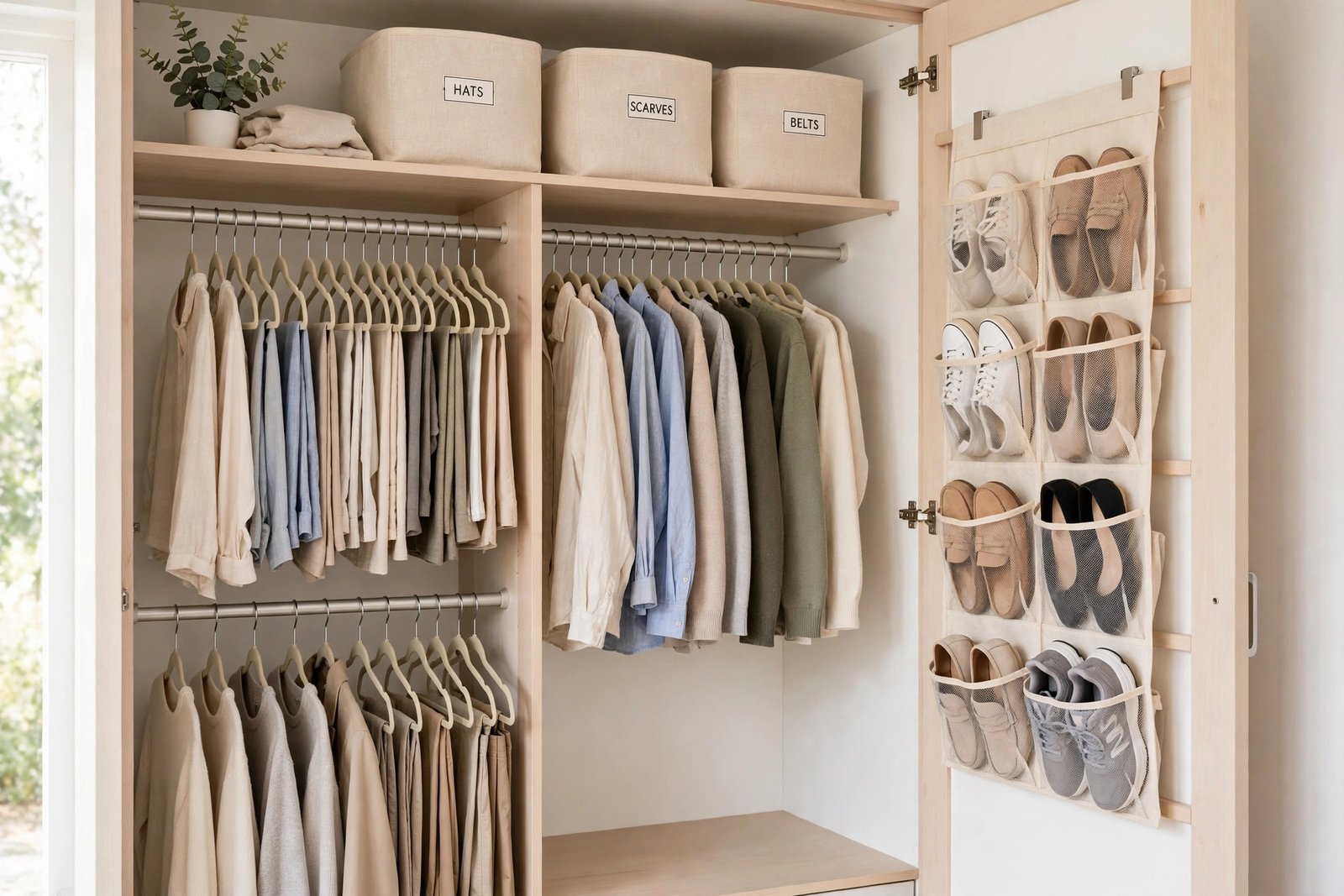
Small Closet Organization: 16 Ideas That Triple Hanging Space
A small closet feels full long before it is full. One rod, one shelf, and a floor piled with shoes — most of the air in there is wasted, and the clothes you actually wear are buried behind the ones you forgot you owned.
Tripling hanging space is not about buying a bigger closet. It is about using the vertical space you already have, in the right order. These sixteen ideas do that, from the cheapest change first. Nothing needs drilling or a landlord’s permission.
The Big Win First: Double the Rod
1. Add a second hanging rod
One rod wastes the bottom half of every closet. A second rod, hung halfway down with a tension rod or a hanging rod extender, instantly doubles hanging space for shirts, blouses and folded trousers. Hang short items on the top rod and short items on the bottom rod too — long coats and dresses keep one side of the closet to themselves.
2. Switch to slim, matching hangers
Bulky plastic and wire hangers eat centimetres and slide clothes onto the floor. Slim velvet hangers are about half as thick, they grip fabric, and because they match, the closet looks calmer the moment you switch. Replace them in one go if you can — a half-switched closet still looks chaotic, and mixed hangers snag each other.
3. Hang clothes by type, then by colour
All shirts together, all trousers together, then light to dark inside each group. It sounds fussy, but it is how you find things in ten seconds instead of ten minutes, and it is how you notice you own four black jumpers and no white ones. When everything is visible, you stop buying duplicates.
4. Use the rod ends for accessories
The last 15 cm of a rod is dead space for clothes and perfect space for accessories. Hang a scarf ring, a belt hook, or a chain of S-hooks holding bags. Accessories hung here stay visible and untangled, instead of knotted in a drawer.
Shelves: Stop the Stack Collapse
5. Add shelf dividers
Folded jumpers stacked without dividers lean, slide, and collapse into one pile. Shelf dividers — simple upright panels that stand on the shelf — keep each stack separate, so pulling one jumper out does not bring three with it. Two dividers per shelf is usually enough.
6. Fold the KonMari way, or roll it
Folded clothes stored upright in a drawer or a bin, like files in a filing cabinet, take less space than flat stacks and let you see everything at once. Roll T-shirts and gym clothes instead of folding them — rolled clothes fit into gaps that folded stacks cannot reach, including the shelf above the rod.
7. Put a shelf above the rod — and use it properly
The shelf above the rod is for things you need rarely: out-of-season clothes in labelled bins, spare bedding, the bag you use twice a year. Put a bin up there, not a loose pile — loose piles fall on your head, bins do not. Label the bin on the front, in big letters, so you can read it from the floor.
8. Add a hanging shelf organizer
A fabric shelf that hangs from the rod gives you six cubbies where there was only air: one for T-shirts, one for gym clothes, one for scarves, and so on. It costs less than a meal out, installs in a minute, and moves with you. Put the things you reach for most at eye level, not at the bottom.
The Floor and the Door
9. Shoes up, not out
Shoes on the closet floor spread until they block the door. A two-tier shoe rack, or a hanging shoe organizer on the closet door, lifts them off the floor and keeps pairs together. Keep only the shoes you wear this week in the closet; the rest go to under-bed storage, where our under-bed storage guide shows how to store them flat and dust-free.
10. Use the inside of the door
The inside of a closet door is a whole extra wall. An over-door rack holds shoes, a hook rail holds tomorrow’s outfit, and a small pocket organizer holds belts, ties and jewellery. Nothing here needs a screw — over-door hooks sit on top of the door and come off in seconds when you move out.
11. A basket for the in-between clothes
Every closet needs a home for the “worn once, not dirty yet” clothes — the jumper you wore for two hours, the jeans that can go again. A basket on the closet floor or a hook just inside the door holds them, so they stop living on the bedroom chair. Empty the basket into the wash or back onto a hanger every Sunday.
The Edit That Makes It All Work
12. Take everything out first
You cannot organize a closet you have not emptied. Take every single thing out, wipe the shelves, and only put back what you have worn in the last year. The rest goes into three piles: donate, repair, or store elsewhere. Most small closets gain a third of their space back from this step alone — before you buy a single organizer.
13. One in, one out — from today
A closet stays organized only if something leaves when something arrives. New shirt in, old shirt out, same day. Put a small donation bag on the closet floor so the outgoing item has somewhere to go immediately, instead of living on a chair for a month.
14. Keep a capsule, not a collection
You do not need thirty tops. You need ten you love, in colours that go together, that fit the life you actually live. Pick your ten, hang them at eye level, and move the rest to a back shelf or a storage bin. If you miss something in two weeks, swap it back in — most people never do.
15. Store off-season clothes by the season, not by the item
Winter coats in summer, summer dresses in winter — off-season clothes should leave the closet entirely, in one labelled bin, to the top shelf or under the bed. Keeping them in the closet means you fight through them every morning to reach the clothes you can actually wear.
16. The five-minute weekly reset
Every Sunday, five minutes: hang anything on the floor, return the in-between basket to the wash or a hanger, and check the shoe rack. A closet that resets weekly never needs another full-day declutter — and it is the same habit that keeps a small apartment clean, as our small apartment cleaning routine will show when it publishes.
The Order to Do It In
Morning: empty the closet, edit, and wipe it down. Afternoon: slim hangers, second rod, shelf dividers, and the hanging organizer. Evening: hang by type and colour, put shoes on the rack, and hang tomorrow’s outfit on the door hook. One day, roughly $30–60 in organizers, and a closet that holds three times what it held yesterday.
Start with the rod and the hangers — they are the two changes that pay for everything else. Then extend the same system to the rest of the home: our 15 small apartment storage ideas use the same vertical thinking in every room, and our studio apartment organization guide shows how a closet like this fits into a 400 sq ft home.


2 Comments